BERTA LINE

BERTA LINE SHOWROOM
interior of public spaces
10 Bolshoy Kharitonevsky Lane, Moscow
2026
completed
Stanislav Kozeen, Marcelo Rueda, Julia Grishina, Ekaterina Tsyganenko
BERTA LINE LINGERIE
Sergey Krasyuk
One of the key objectives of the project was to reduce the volume of construction work inside the premises. It was important to avoid a full renovation cycle and to implement the interior design primarily through cosmetic changes and the introduction of new furniture pieces. After analyzing the space on site, we concluded that the existing architectural environment allowed us to achieve the goal with minimal means. Consequently, the work was limited to painting the walls and sanding the parquet.
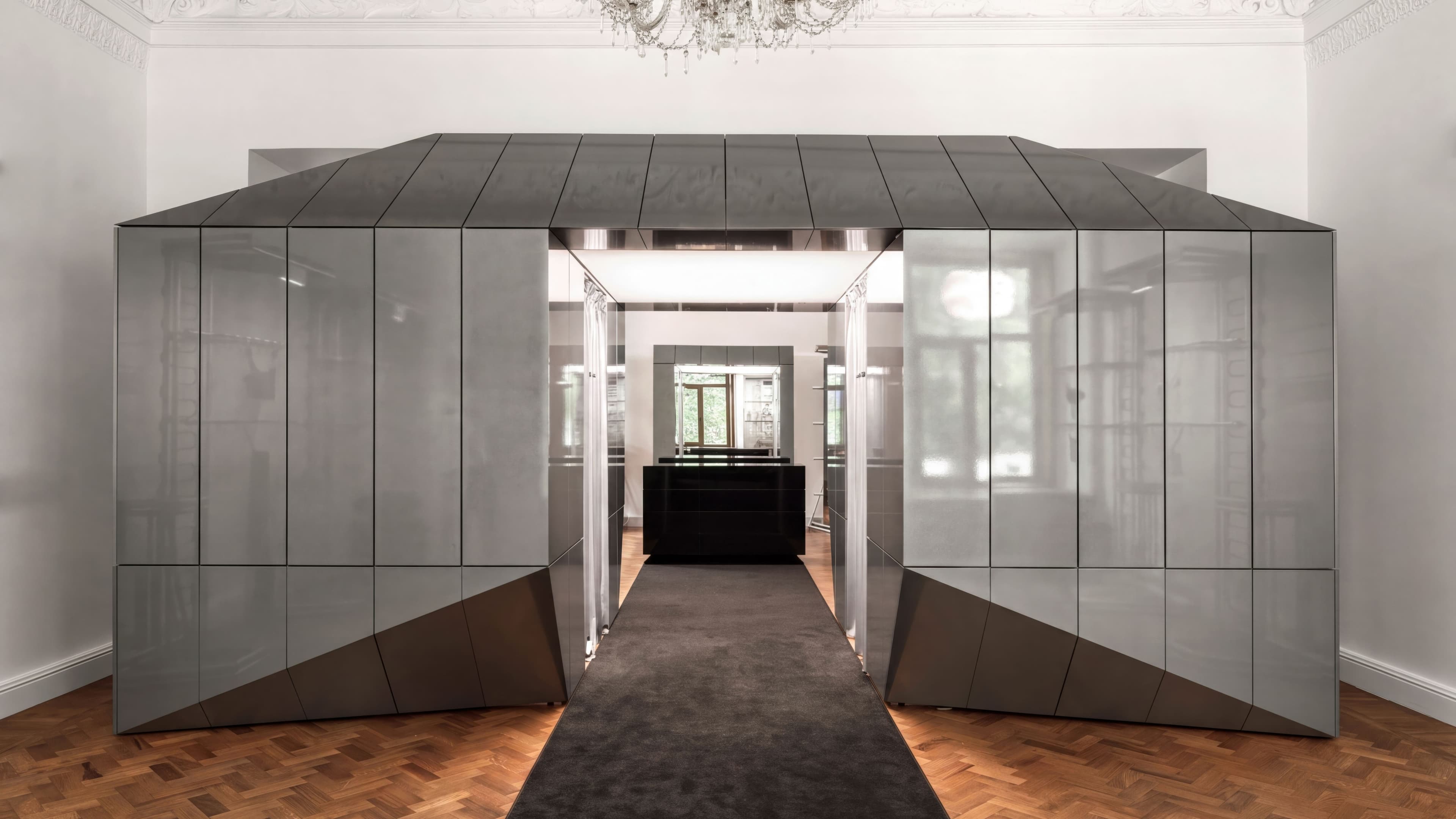
The project’s design code is based on the contrast between historical architecture and contemporary technogenic elements. The space, featuring stucco moldings, cornices, and wooden windows, is complemented by industrial-style furniture. Aluminum profile rails with exposed connection points emphasize the chosen aesthetic and create an expressive visual language for the interior.
The central compositional element is a volumetric MDF structure with an artistic textured paint finish. Inside it are two fitting rooms—finished in light pink and light yellow hues—as well as built-in storage systems for dispensing online orders. This element not only organizes the store’s functional processes but also divides the space into two distinct halls: one houses the reception area and sales equipment, while the other contains a lounge zone with a sofa and additional rails for displaying products.
Lightboxes on the windows serve as a separate design-defining element. They are made of plastic wrapped in lace fabric, a material used in lingerie production. This solution strengthens the connection between the interior and the brand’s product, creating a visual contrast between the industrial expressiveness of the space and the delicate texture of the textile.
Thus, the project is built on a balance between rugged technogenic forms and the refined, soft aesthetic of Berta Line lingerie, which helps highlight the brand’s character and create a memorable spatial identity.

One of the key objectives of the project was to reduce the volume of construction work inside the premises. It was important to avoid a full renovation cycle and to implement the interior design primarily through cosmetic changes and the introduction of new furniture pieces. After analyzing the space on site, we concluded that the existing architectural environment allowed us to achieve the goal with minimal means. Consequently, the work was limited to painting the walls and sanding the parquet.
The project’s design code is based on the contrast between historical architecture and contemporary technogenic elements. The space, featuring stucco moldings, cornices, and wooden windows, is complemented by industrial-style furniture. Aluminum profile rails with exposed connection points emphasize the chosen aesthetic and create an expressive visual language for the interior.
The central compositional element is a volumetric MDF structure with an artistic textured paint finish. Inside it are two fitting rooms—finished in light pink and light yellow hues—as well as built-in storage systems for dispensing online orders. This element not only organizes the store’s functional processes but also divides the space into two distinct halls: one houses the reception area and sales equipment, while the other contains a lounge zone with a sofa and additional rails for displaying products.
Lightboxes on the windows serve as a separate design-defining element. They are made of plastic wrapped in lace fabric, a material used in lingerie production. This solution strengthens the connection between the interior and the brand’s product, creating a visual contrast between the industrial expressiveness of the space and the delicate texture of the textile.
Thus, the project is built on a balance between rugged technogenic forms and the refined, soft aesthetic of Berta Line lingerie, which helps highlight the brand’s character and create a memorable spatial identity.


